Image 2 Beyond Beauty: Disassembly, Architecture, Calligraphy & Dunhuang Mural Prompts
Introduction
Many friends say: the key to AI image generation isn't whether you can draw — it's whether you can describe.
So this time I've gathered another batch of more interesting Image 2 cases.
Unlike the previous article, this isn't just about "pretty pictures." This time, the focus is on use cases better suited for content creation: disassembly diagrams, object knolling, architectural infographics, hand-drawn building studies, ancient calligraphy reproductions, and Dunhuang mural-style art.
These share one thing in common: they're not just generating images — they're creating a form of visual expression.
You can use them for WeChat covers, Xiaohongshu illustrations, knowledge cards, product introductions, traditional culture content, and more.
As always — no theory overload. Just prompts, just results.
Disassembly Diagrams
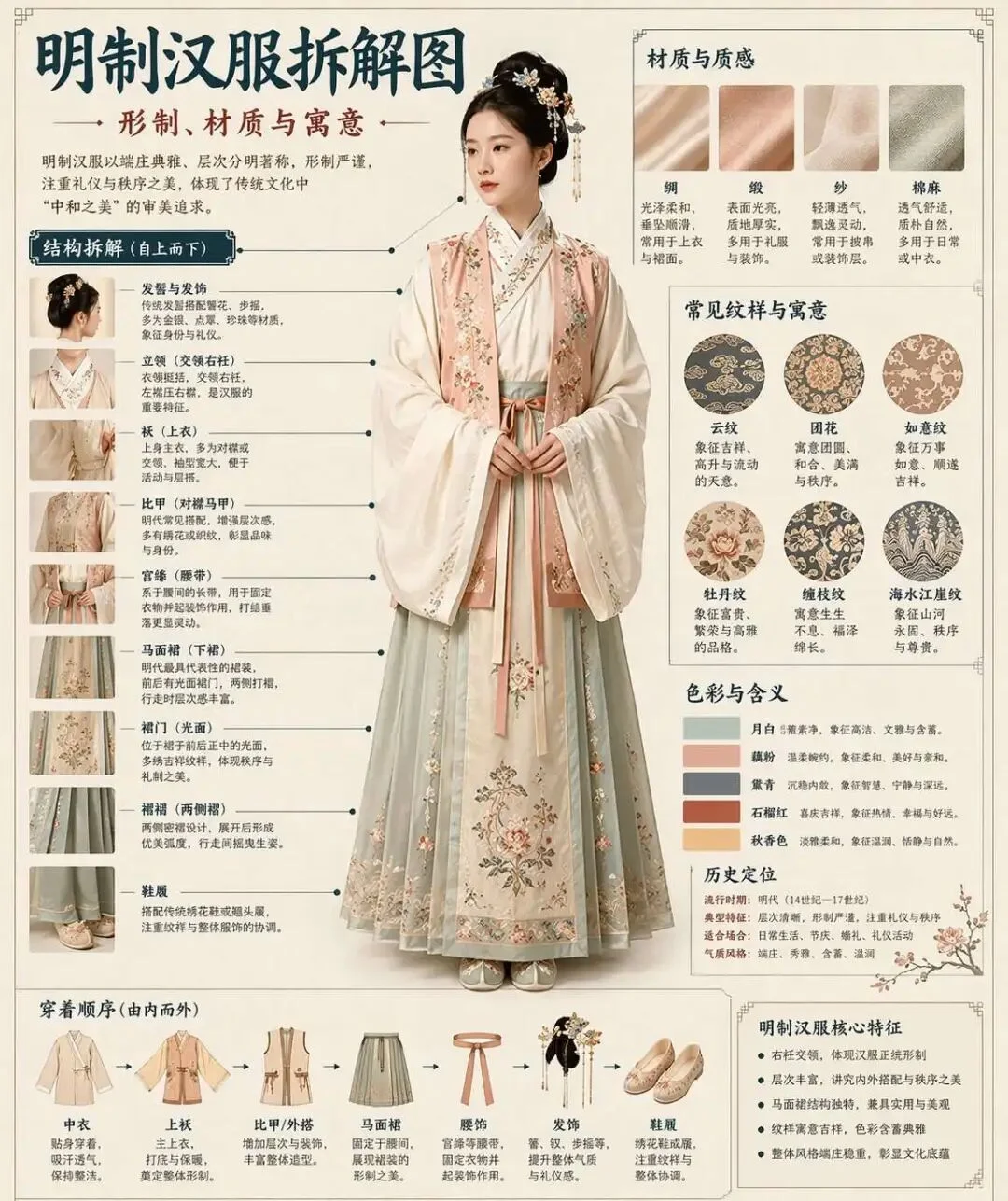
Universal Replaceable-Subject Disassembly Infographic
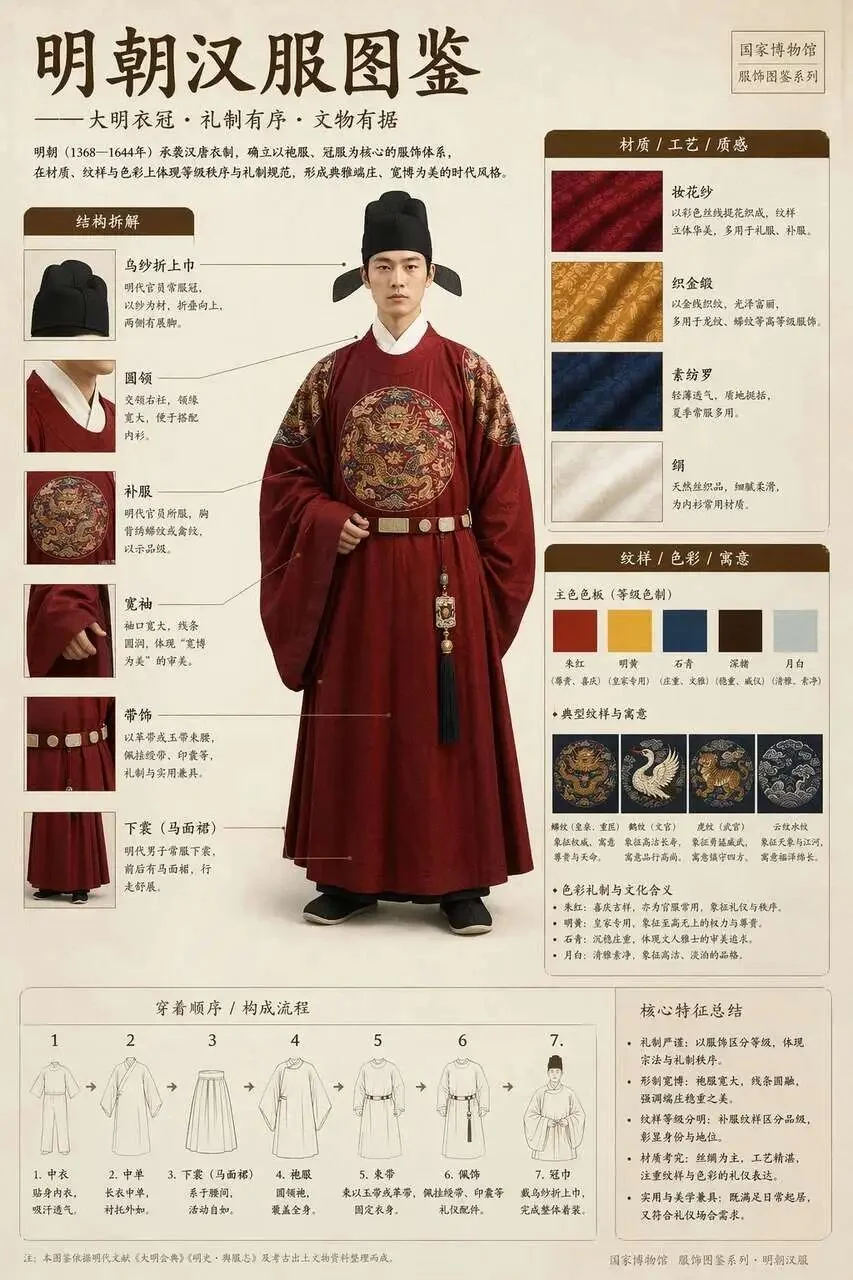
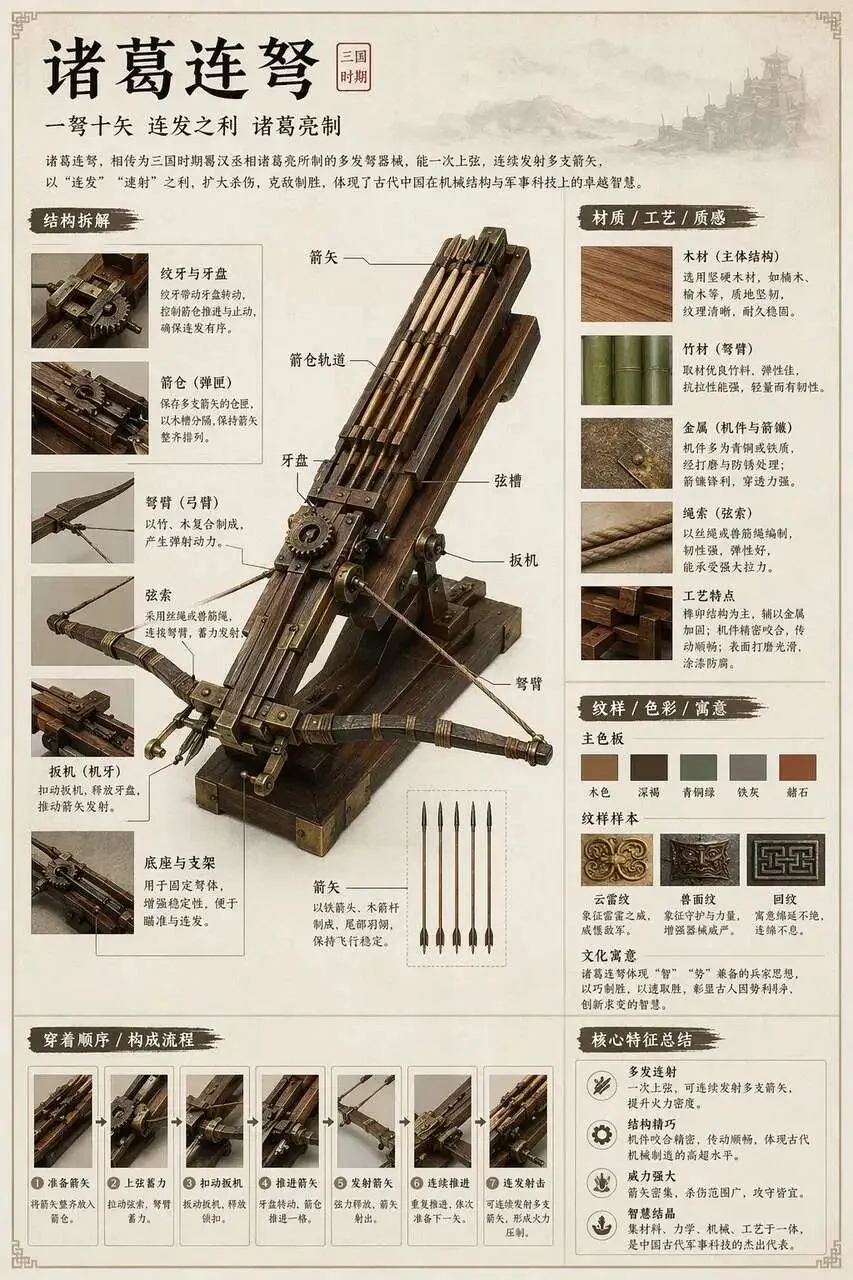
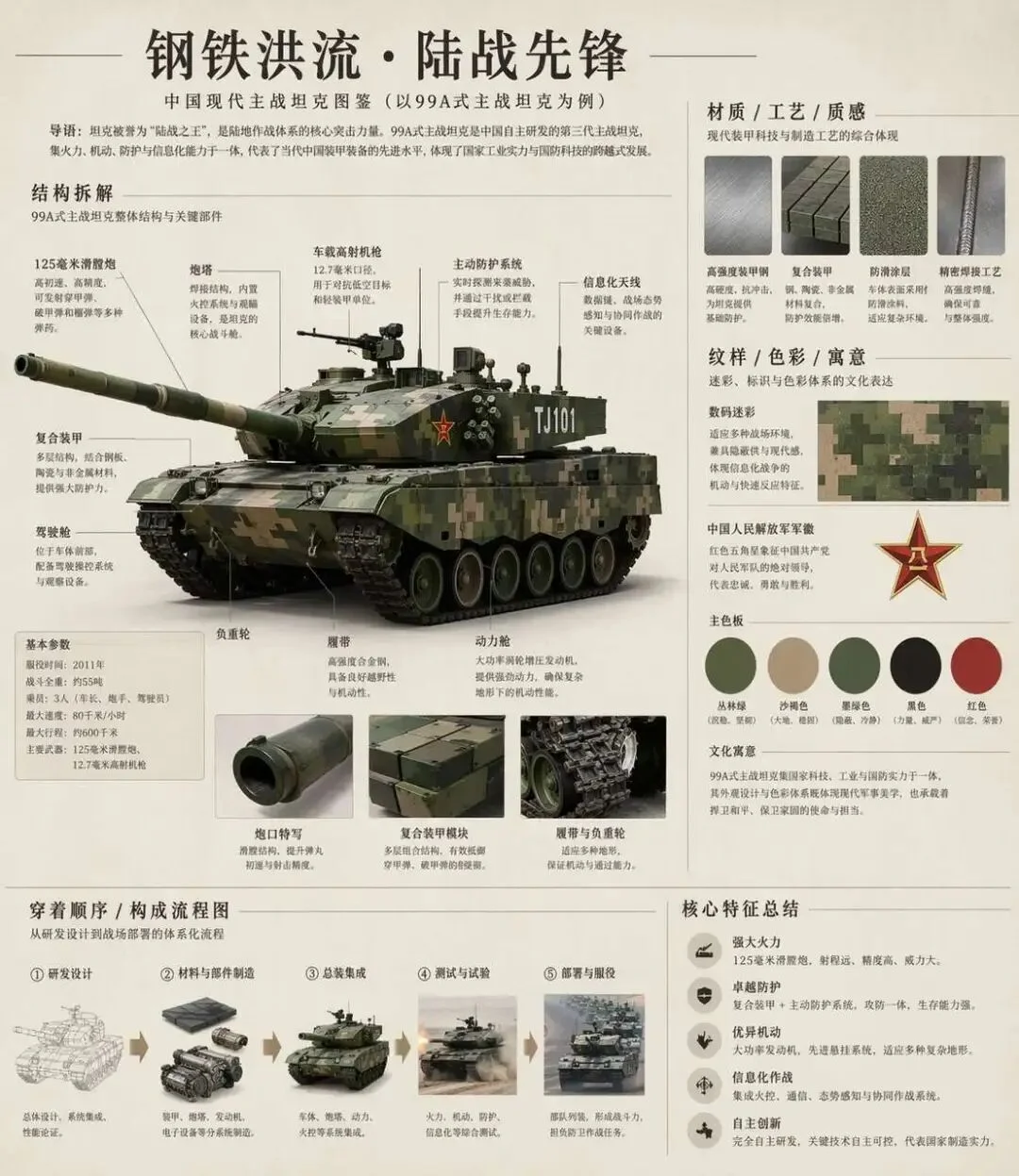
Generate a "museum-style disassembly infographic" based on [TOPIC].

Requirements: The entire image should combine a realistic main visual, structural breakdown, annotations, material explanations, pattern symbolism, color meanings, and a summary of key characteristics. You need to automatically determine the most suitable subject, garment system, artifact structure, era style, key components, materials, color scheme, and layout — no additional input needed.

Overall style: National museum exhibition panel, historical costume guide, cultural heritage infographic — NOT posters, cosplay photos, e-commerce pages, or anime illustrations. Background: cream white, silk-paper white, light tea-toned paper textures. Premium, restrained, professional, collectible.

Layout:
- Top: Chinese title + subtitle + introduction
- Left: structural breakdown with callout annotations and detail insets
- Top right: material/craftsmanship/texture zone with real material swatches
- Mid right: pattern/color/symbolism zone with color palette, pattern samples, cultural notes
- Bottom: assembly sequence + key feature summary

All text must be clean, legible, no garbled characters. Emphasize real structure, material differences, cultural explanation, and guide-quality aesthetics.

Avoid: poster feel, studio photography feel, e-commerce feel, anime feel, messy annotations, wrong structure, blurry text, fake materials, over-decoration.
Tarot Full Overview — Lord of the Mysteries
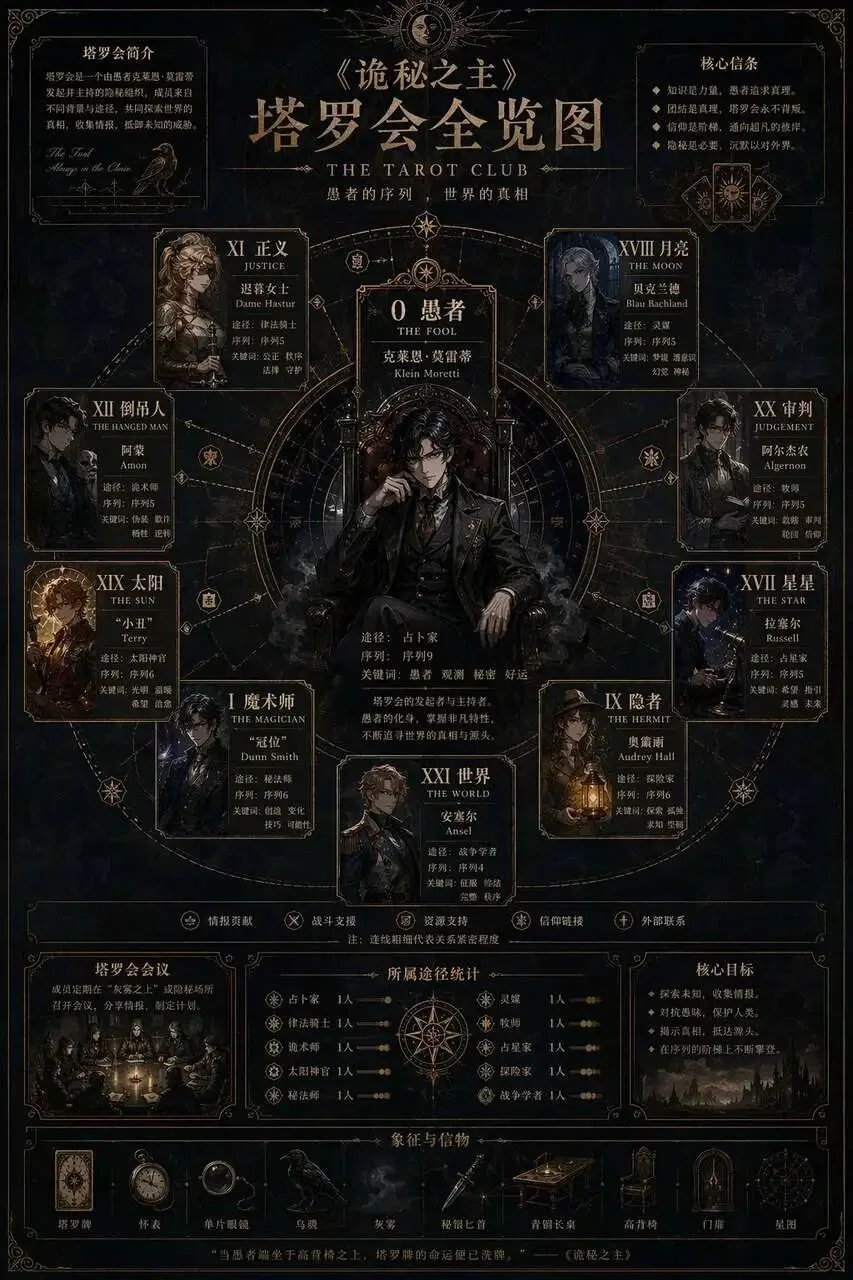
Generate a Lord of the Mysteries Tarot Club full overview, Victorian occultism, black-gold archival style.Pathway and Pillar Relationship Diagram
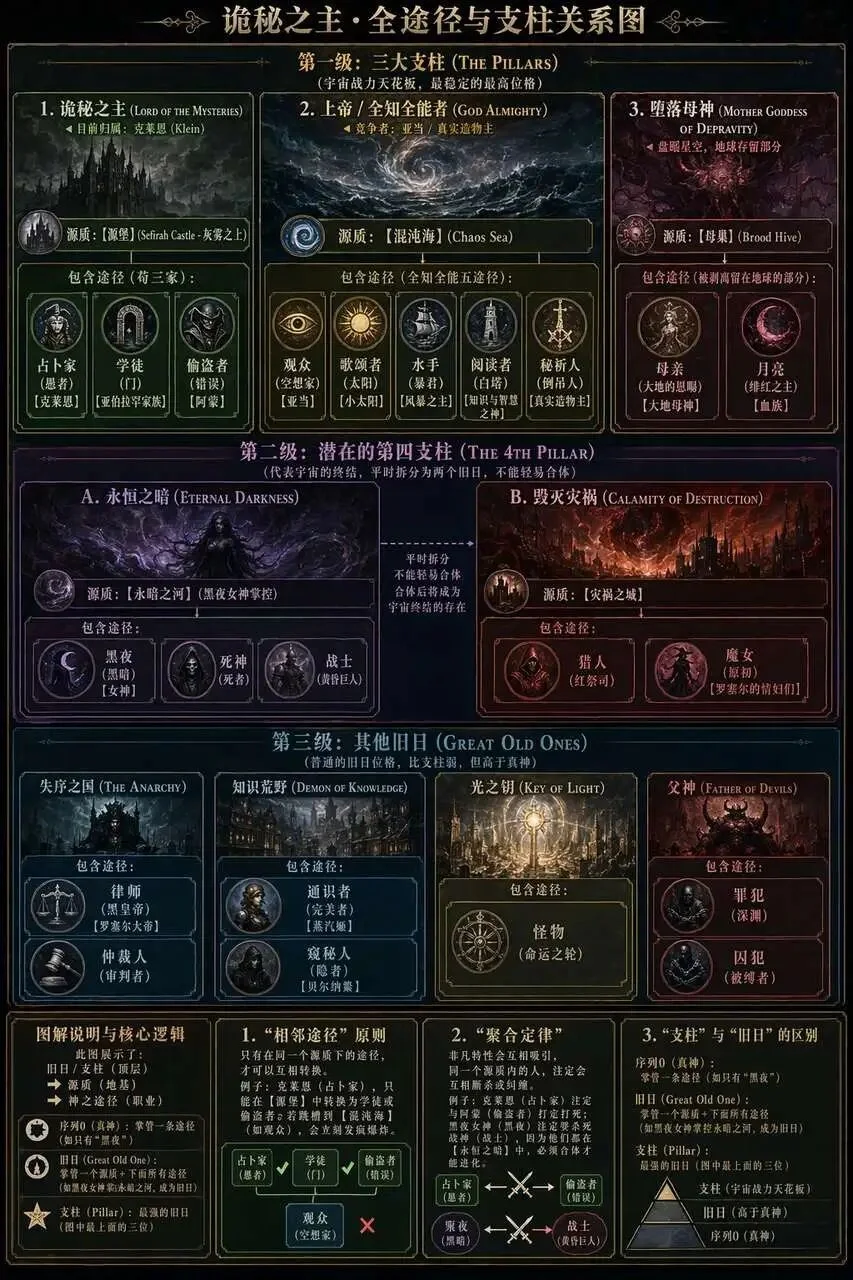
Generate a Lord of the Mysteries full pathway and pillar relationship diagram, including adjacent pathway principles, convergence law, distinction between pillars and Outer Deities.Object Knolling / Deconstruction Photography
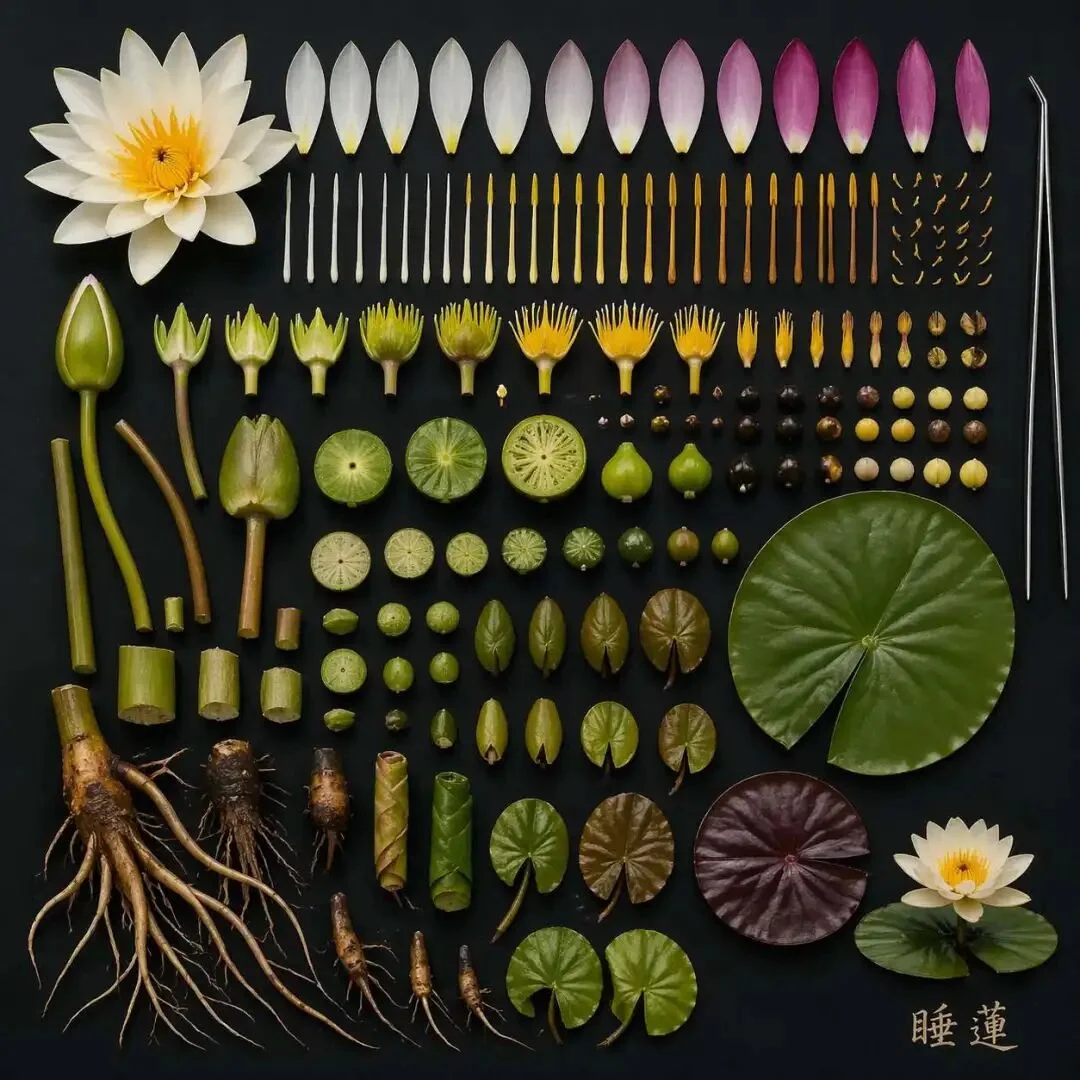
Knolling-style photography, fully deconstructed [OBJECT/THEME], deconstruction concept, strict vertical top-down view, flat-lay arrangement. Components spread in Bento Grid logic with natural slight randomness. Components arranged by size, shape, color, material in gradient progression, with slight directional shifts for visual interest. Each component follows visual order — not deliberately symmetrical, but harmonious. Include all parts, positioned with deliberate design sense. Bottom-right corner shows the object name in calligraphy, alongside one intact original item.

Edge: place one tool/accessory (metal tweezers or theme-related item), clean minimal design, positioned at outer edge without blocking key components.

Lighting: edge-to-edge fill, no white space; soft studio lighting, no hard shadows; 8K ultra-HD, ultra-realistic macro texture, vivid material rendering.

Aspect ratio: 3:4 (customizable).

[Enter the object or theme to deconstruct]
Architectural Aesthetic Infographic
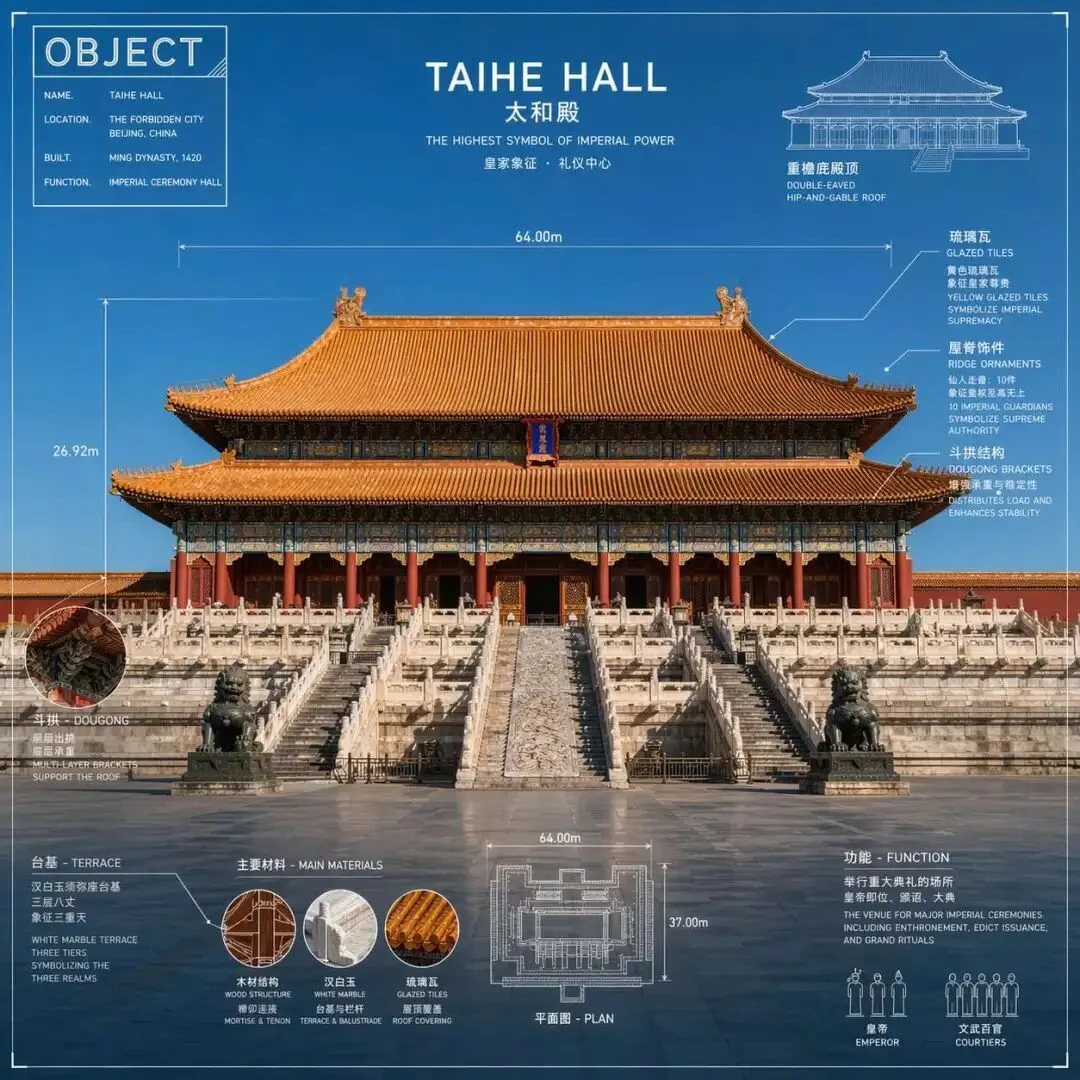
Create a professional and realistic photo presenting [SUBJECT], clean and bright, simple attractive background. All objects shown as real photos, not illustrations. Overlay a technical blueprint-style diagram with white lines, arrows, dimension annotations, labels, and small diagrams showing parts, materials, dimensions, and functions. Clear, elegant, information-rich layout. Top-left corner: a sketch frame labeled "OBJECT". 1:1 ratio. Keep it lively and modern.Input: Subject: Hall of Supreme Harmony (太和殿)
Engineering Exploded-View Diagram
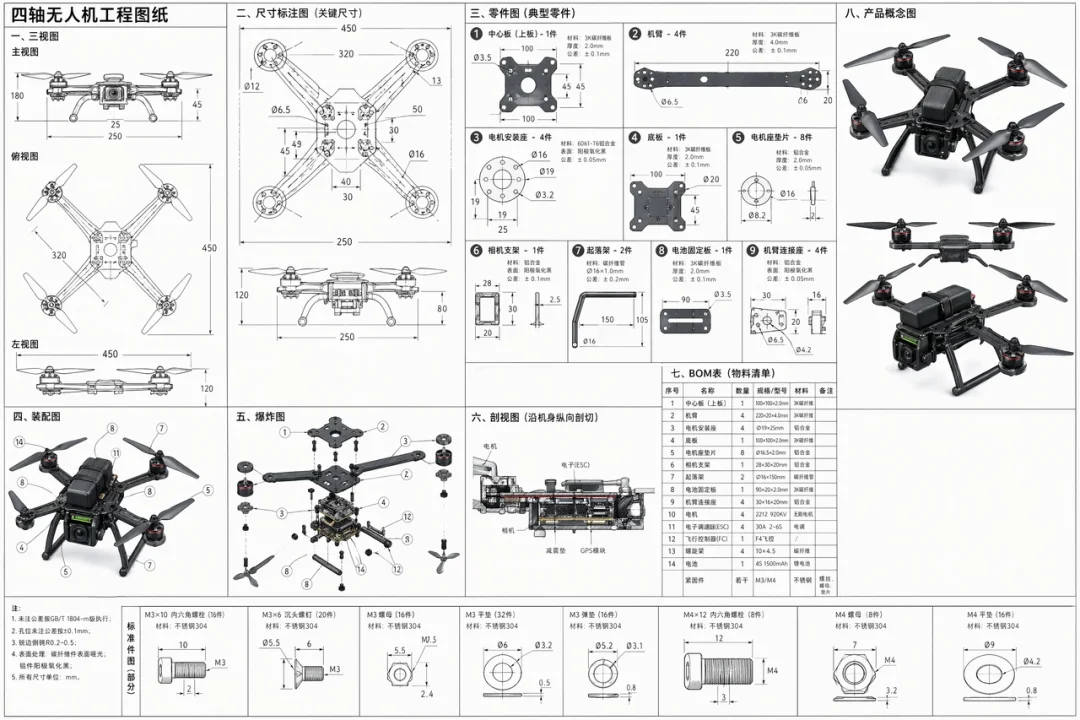
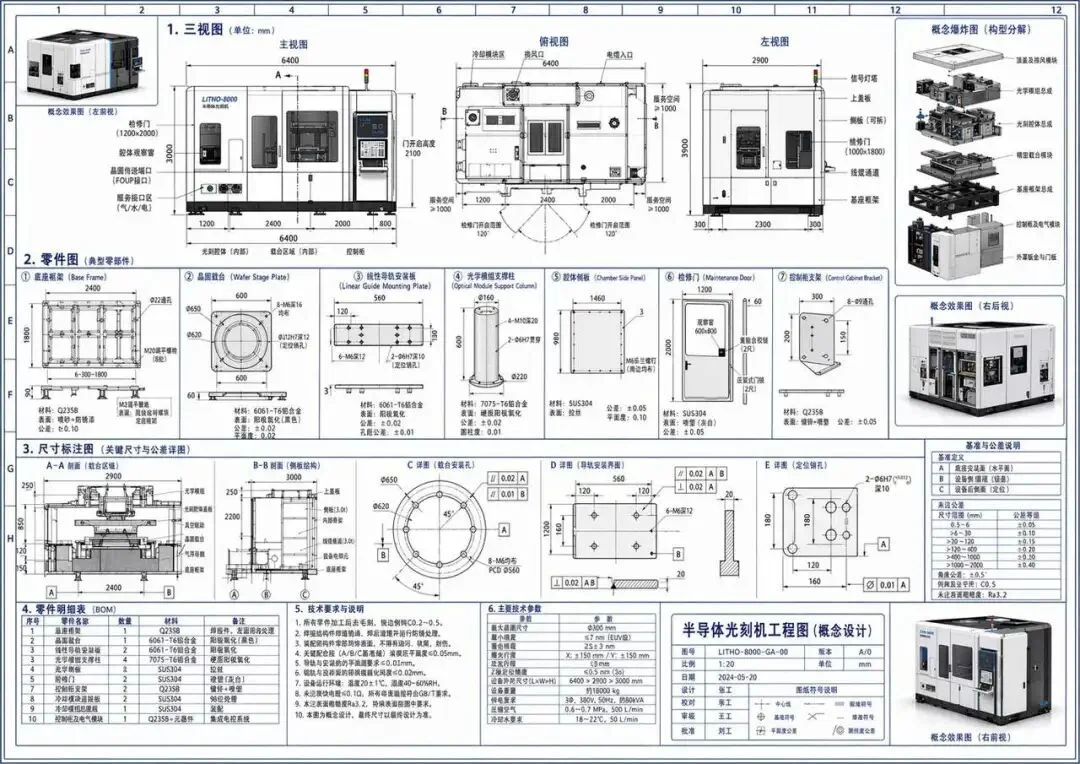
Quadcopter drone with dimensioned engineering drawing, including: orthographic views (front, top, side), part drawings with dimensions/holes/material/tolerances, assembly diagram, exploded assembly view, cross-section view, BOM table, and critical dimension annotations. Include concept sketches in corners.Second image: A lithography machine generated by another user using the same prompt approach.
Architectural Hand-Drawn / Sketch Study Page
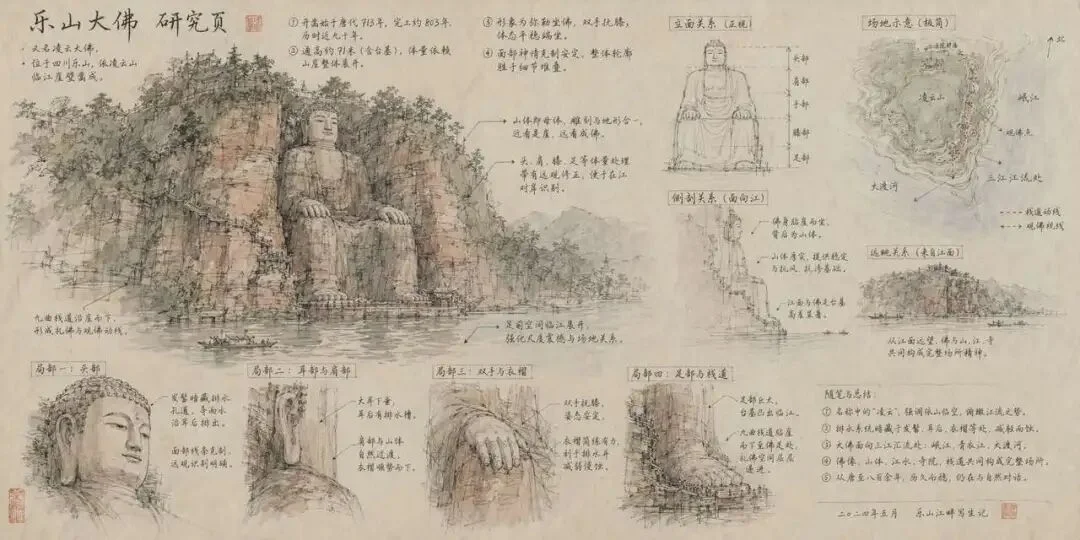
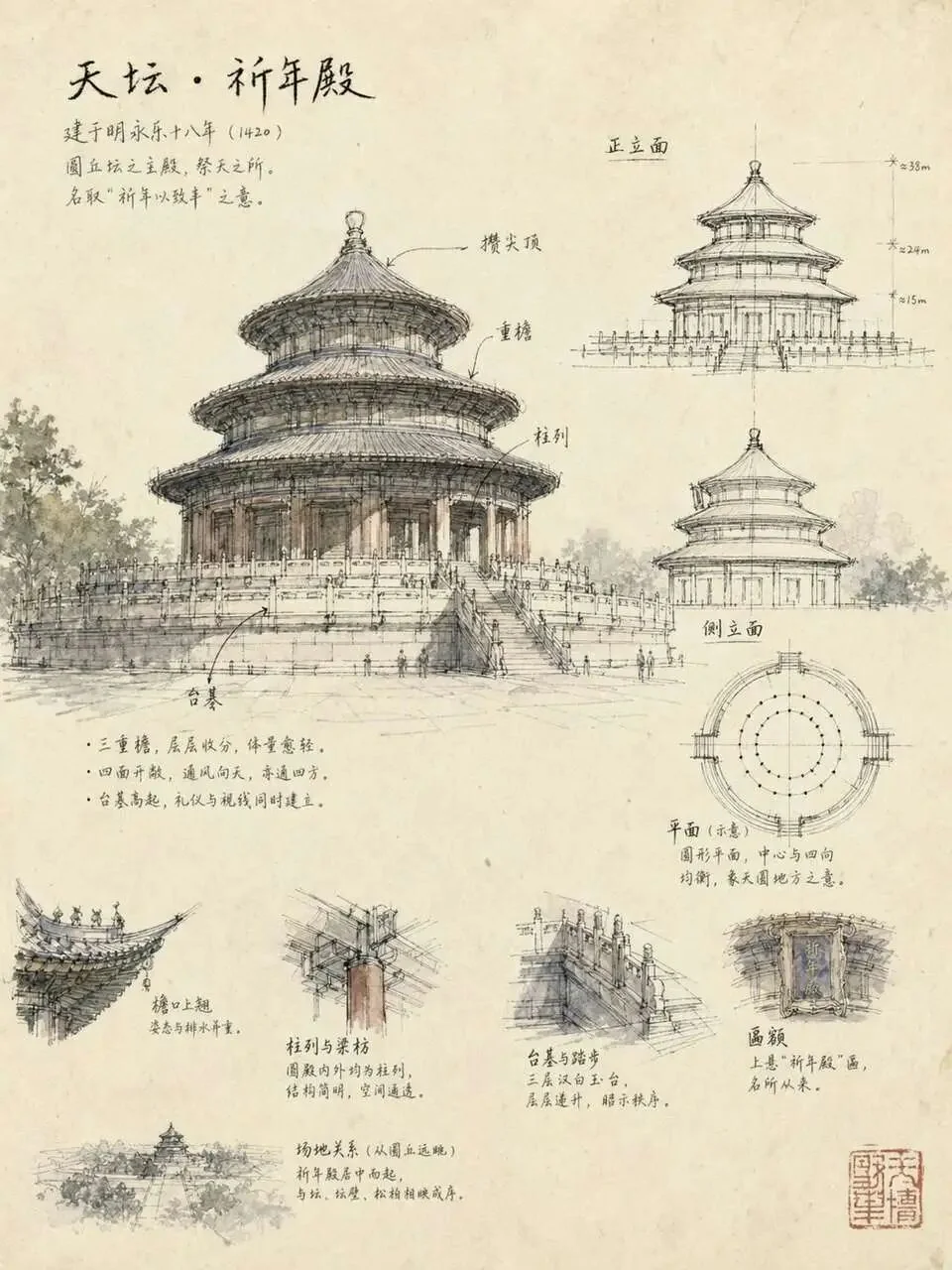
Create an "architect's hand-drawn research page / sketch-style knowledge map" centered on a single building. The entire page must feel like relaxed, restrained, highly概括性的 architect's study sketches — NOT polished illustrations, renderings, blueprints, tourist posters, or information-dense infographics.

Key qualities:
- Loose hand-drawn lines with trial marks, double lines, breaks
- Heavy simplification rather than realism
- Selective detailing, not everything drawn clearly
- Paper texture: slightly yellowed tracing paper / sketch paper / old research drawings
- Colors extremely restrained: pale ochre, light gray, faint ink, subtle green only
- Unfinished feel, breathing space, generous white space

Layout: main perspective sketch (largest), 2-3 light auxiliary analysis drawings, 2-4 detail sketches below, small site-context diagram in corner. Modules should feel like they were progressively added to the same sheet, not mechanically pre-laid-out.

Knowledge delivery: concise architect's observation notes, not textbook formatting. 1-2 points per module max. Example tone: "Double eaves taper upward, lightening the mass."

Avoid: over-completion, over-detailing, too-precise construction drawings, dense annotations, poster/commercial feel.

Variables: Building name = Temple of Heaven, Aspect ratio = 3:4, Knowledge points = 10
Ancient Calligraphy & Paintings
Reproducing Classical Masterpieces
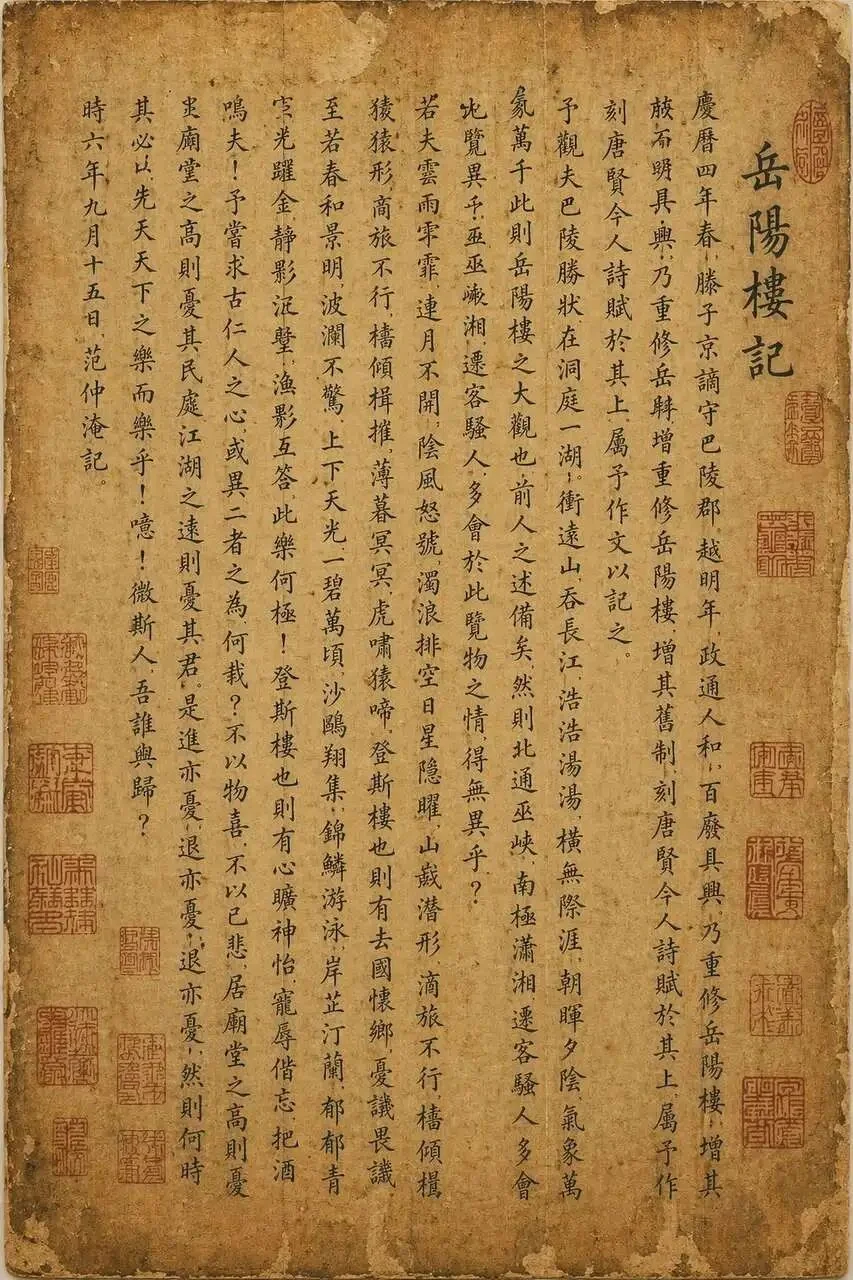
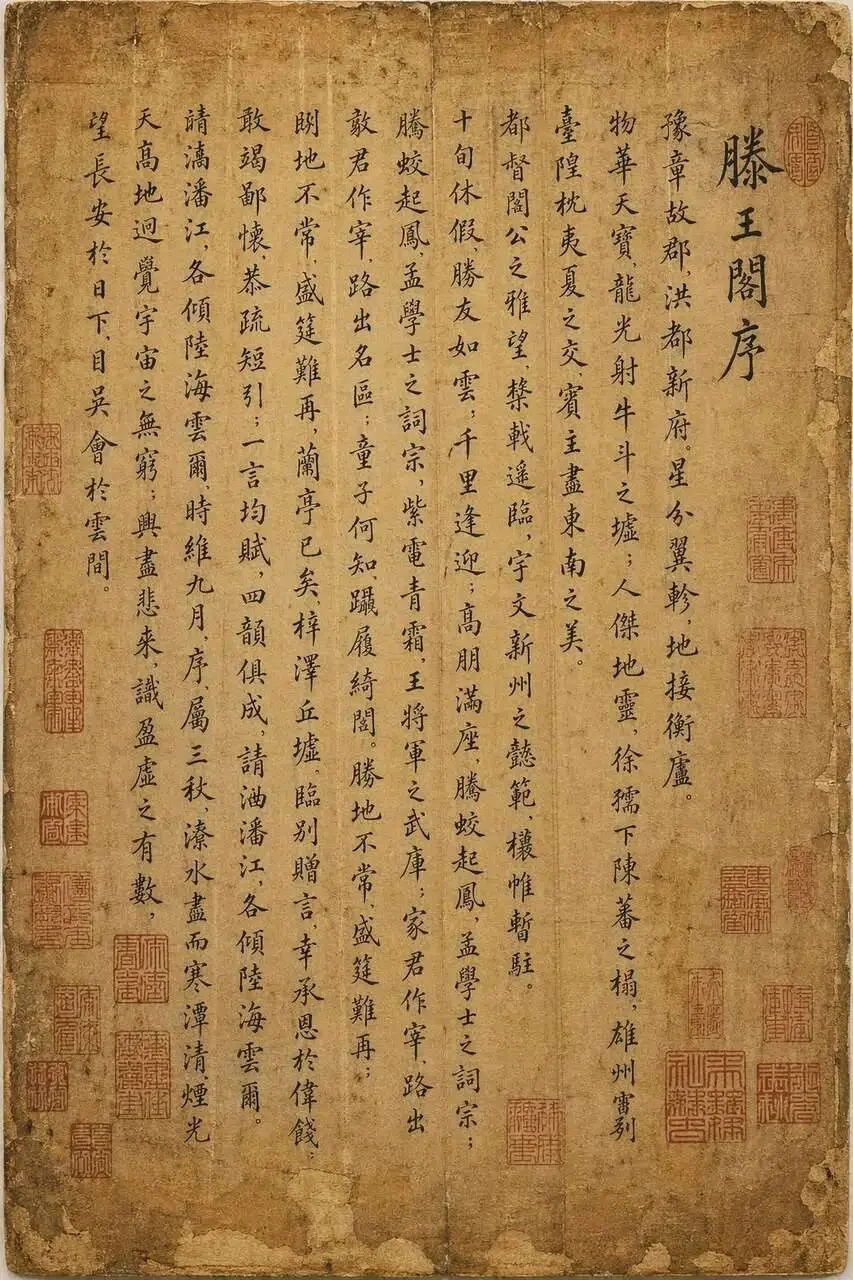
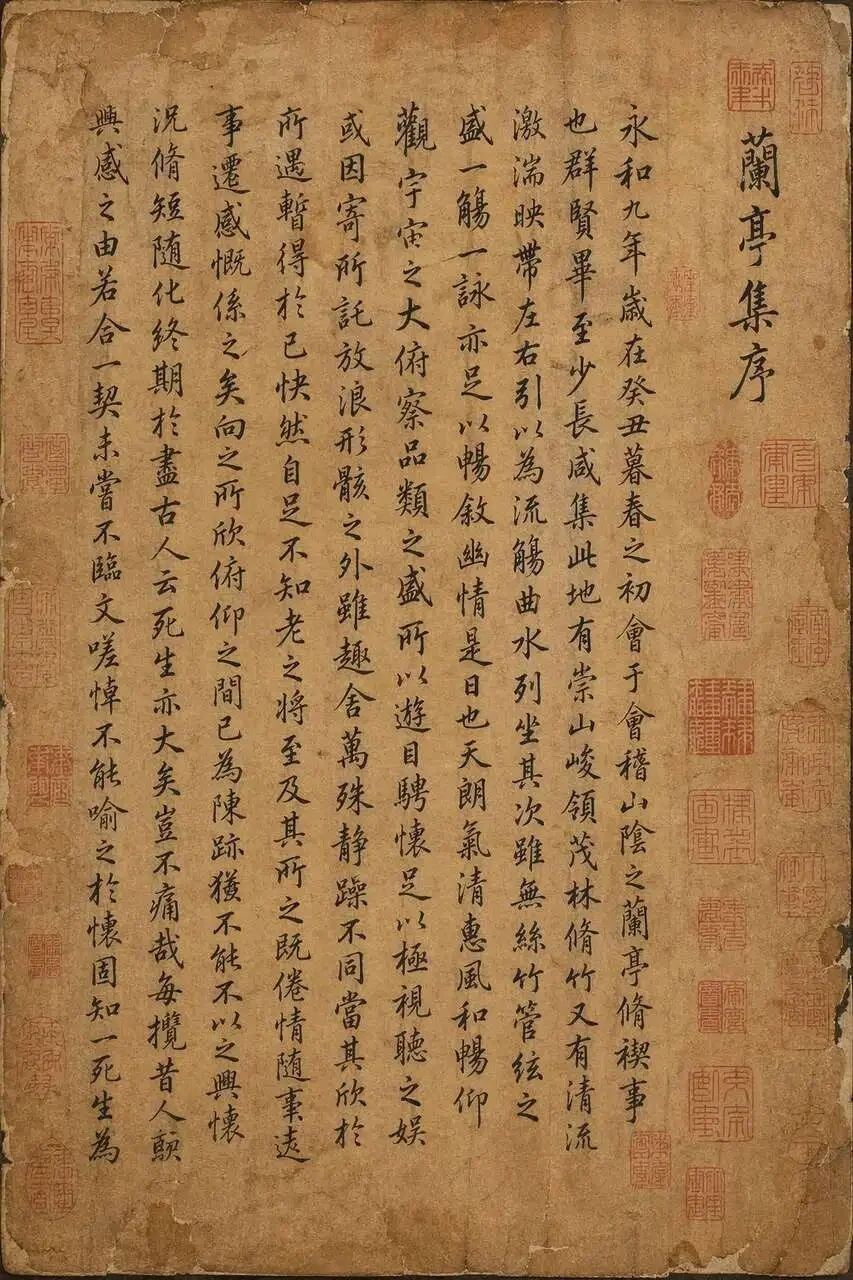

Generate [MASTERPIECE NAME] authentic manuscript image.That's it — one sentence is all you need.
Calligraphy with Emotional Injection
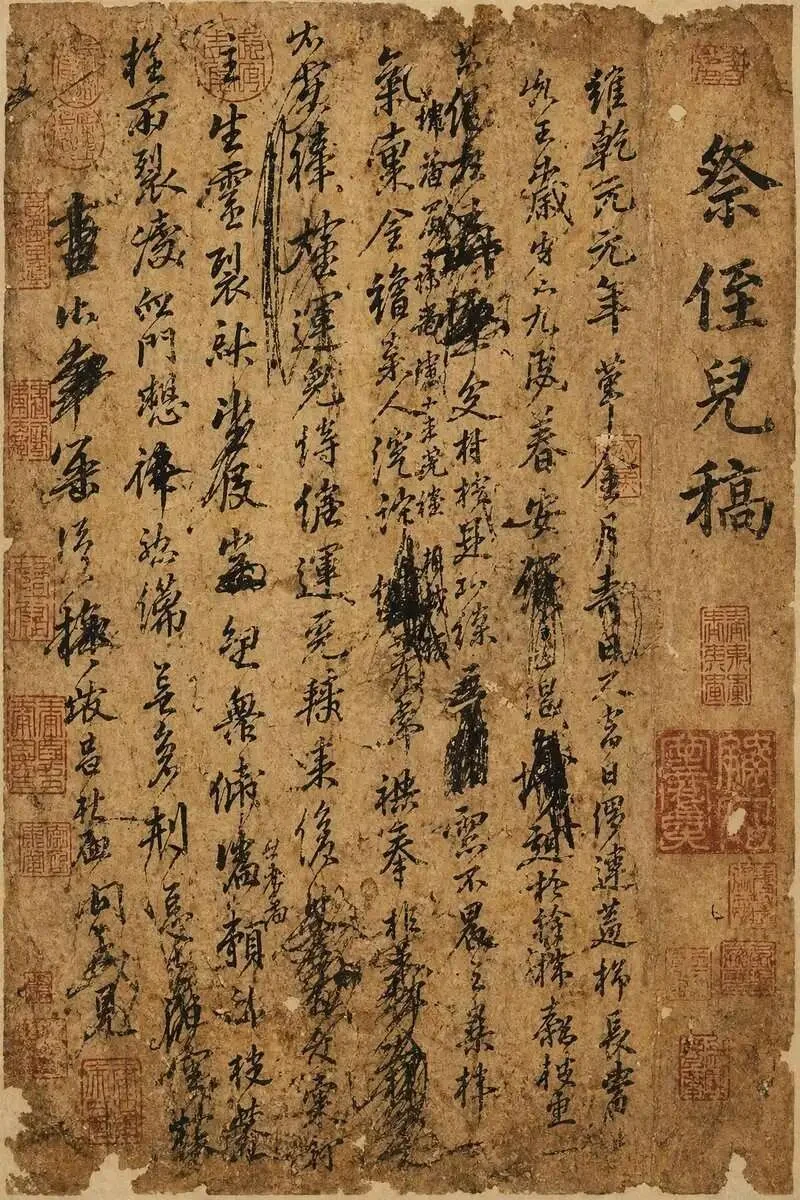
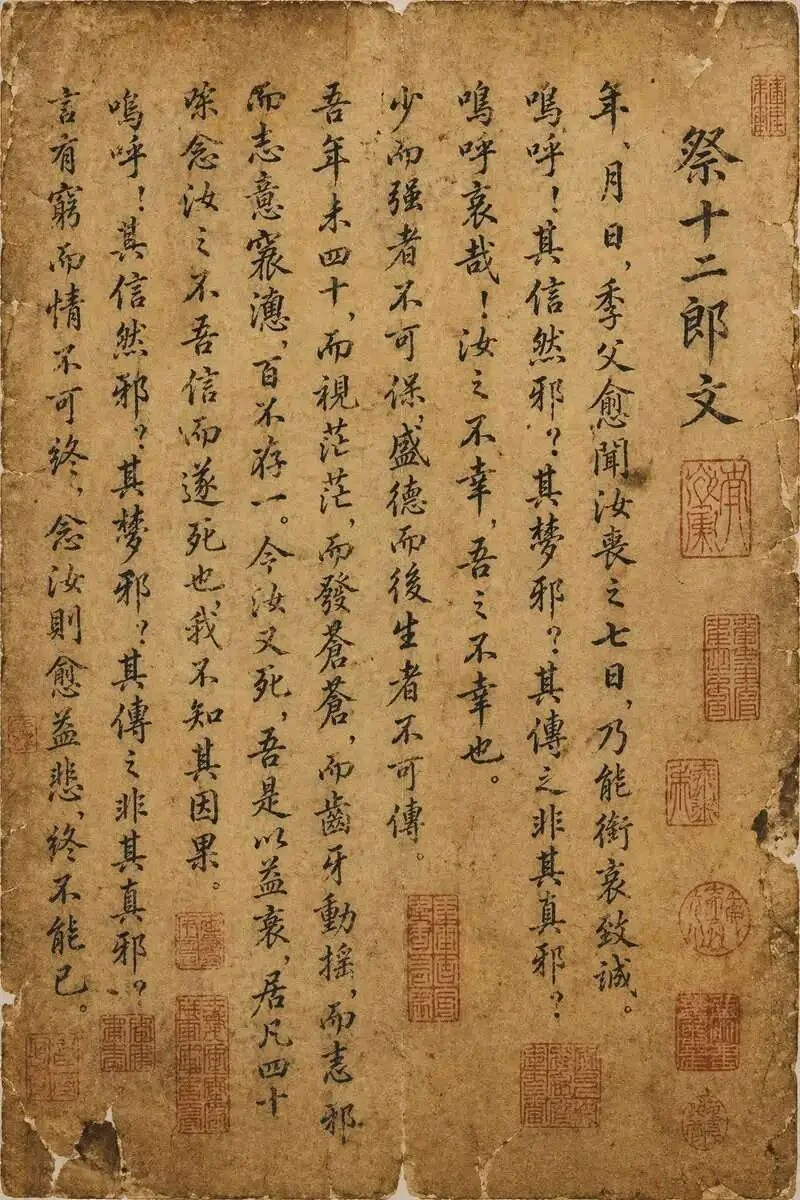
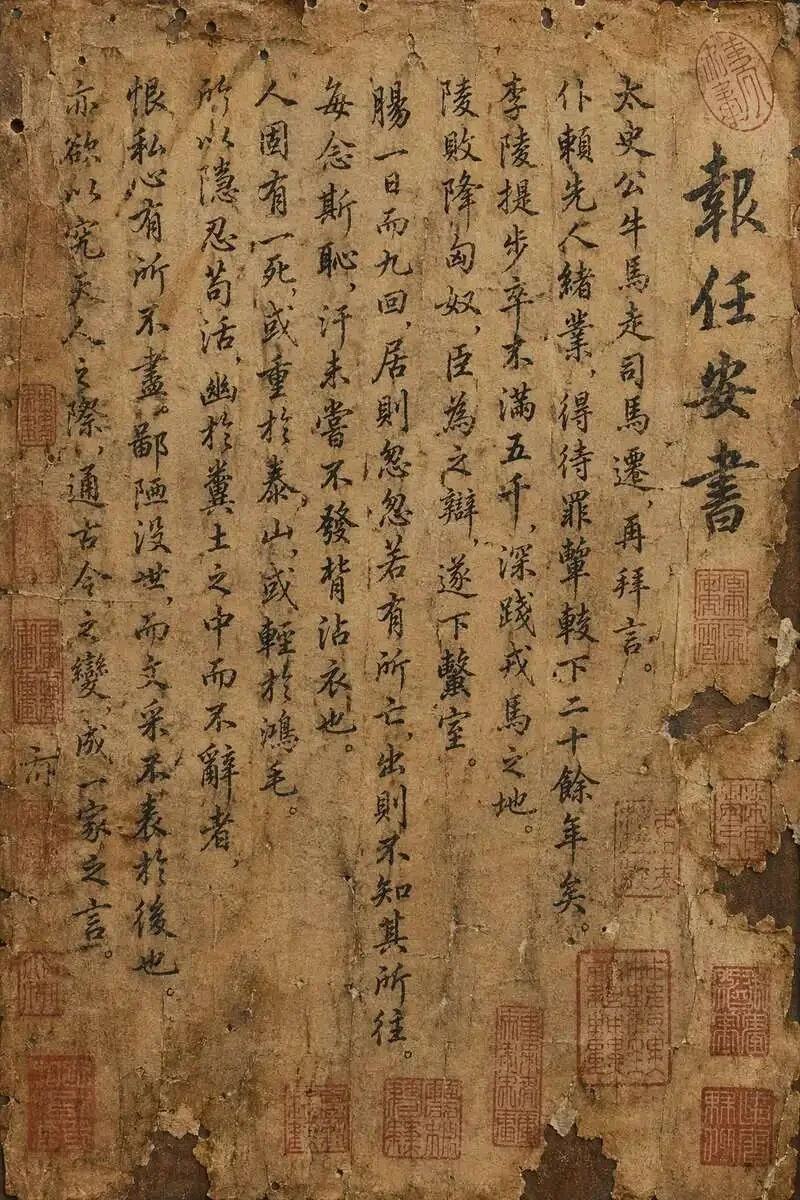
Generate [MASTERPIECE NAME] authentic manuscript image, please incorporate the work's emotional core into the image generation.Calligraphy Copybook / Practice Sheet
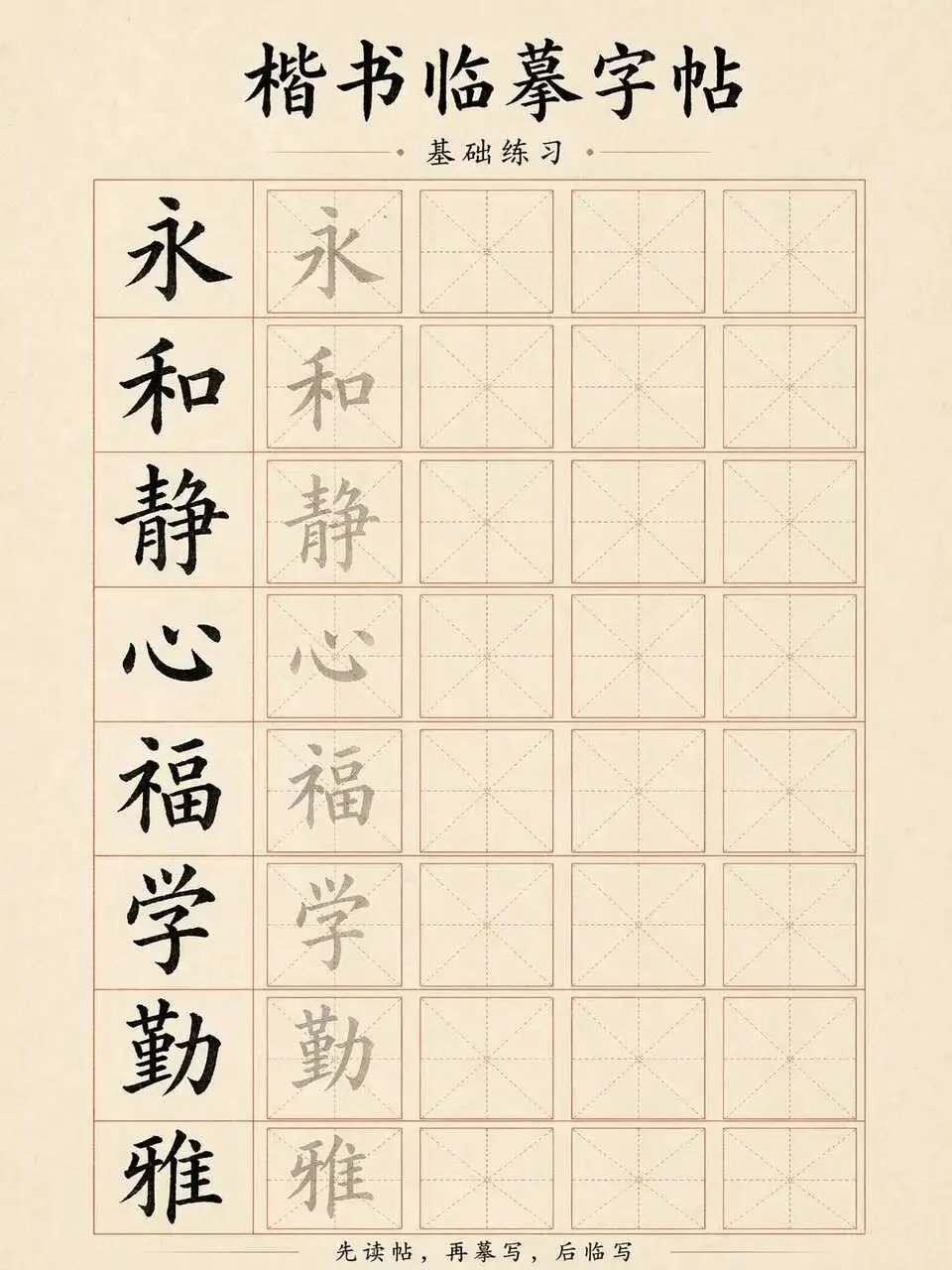
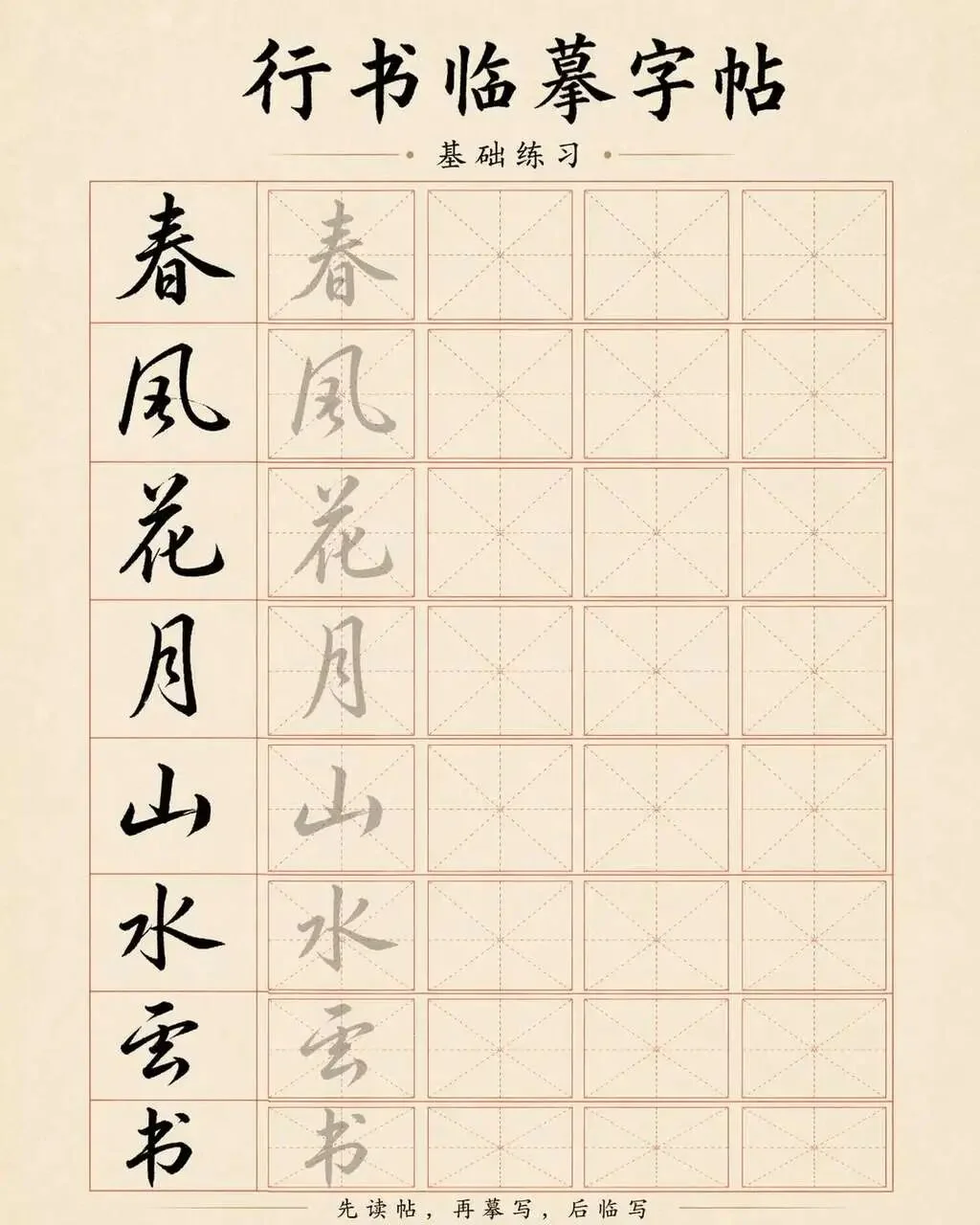
Generate a [SCRIPT STYLE] calligraphy practice copybook sheet.Dunhuang Mural Style
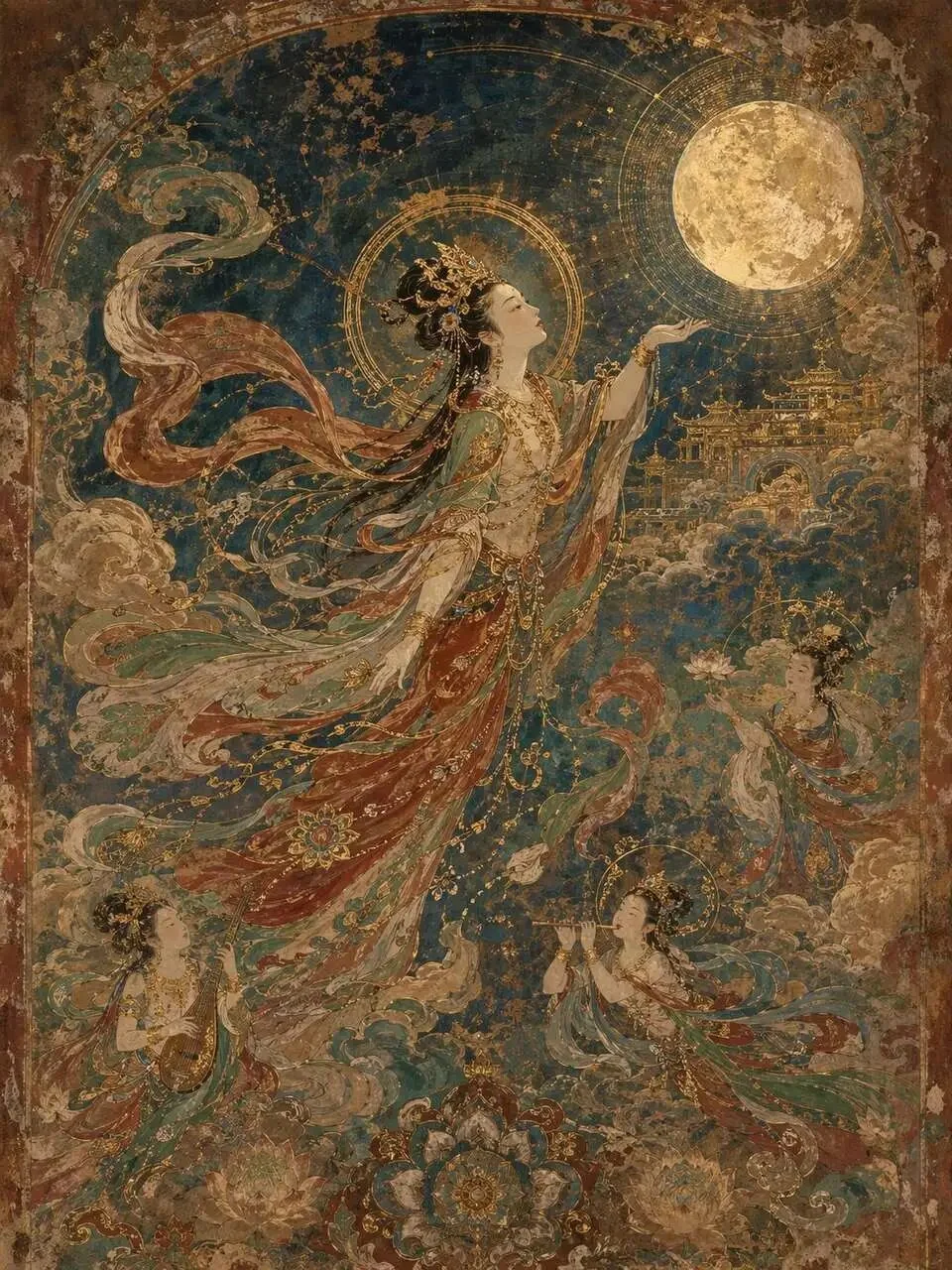
Flying Apsara (飞天神女)
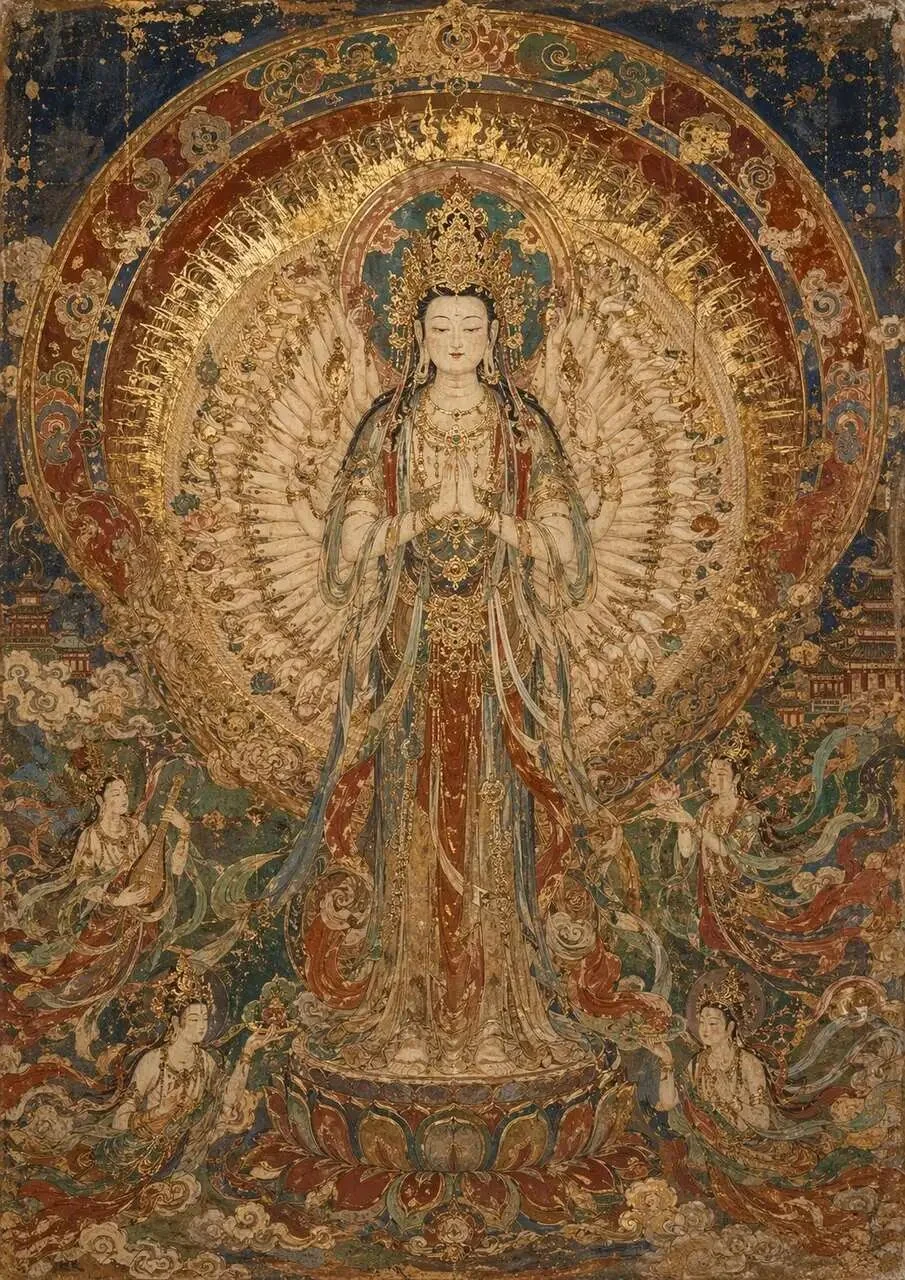
Thousand-Armed Avalokitesvara (千手观音)
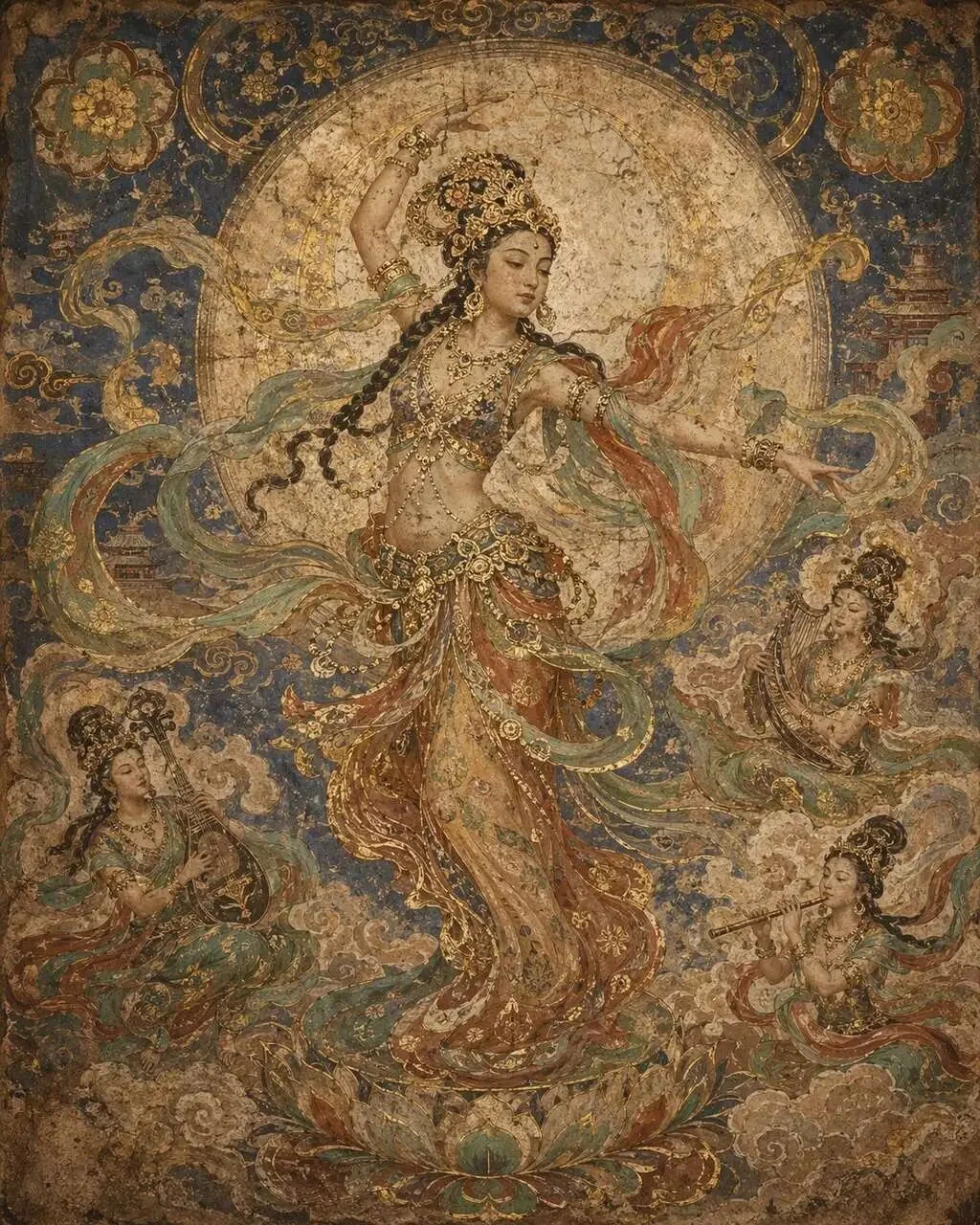
Hu Dancer with Wild Beast (胡姬野物舞)
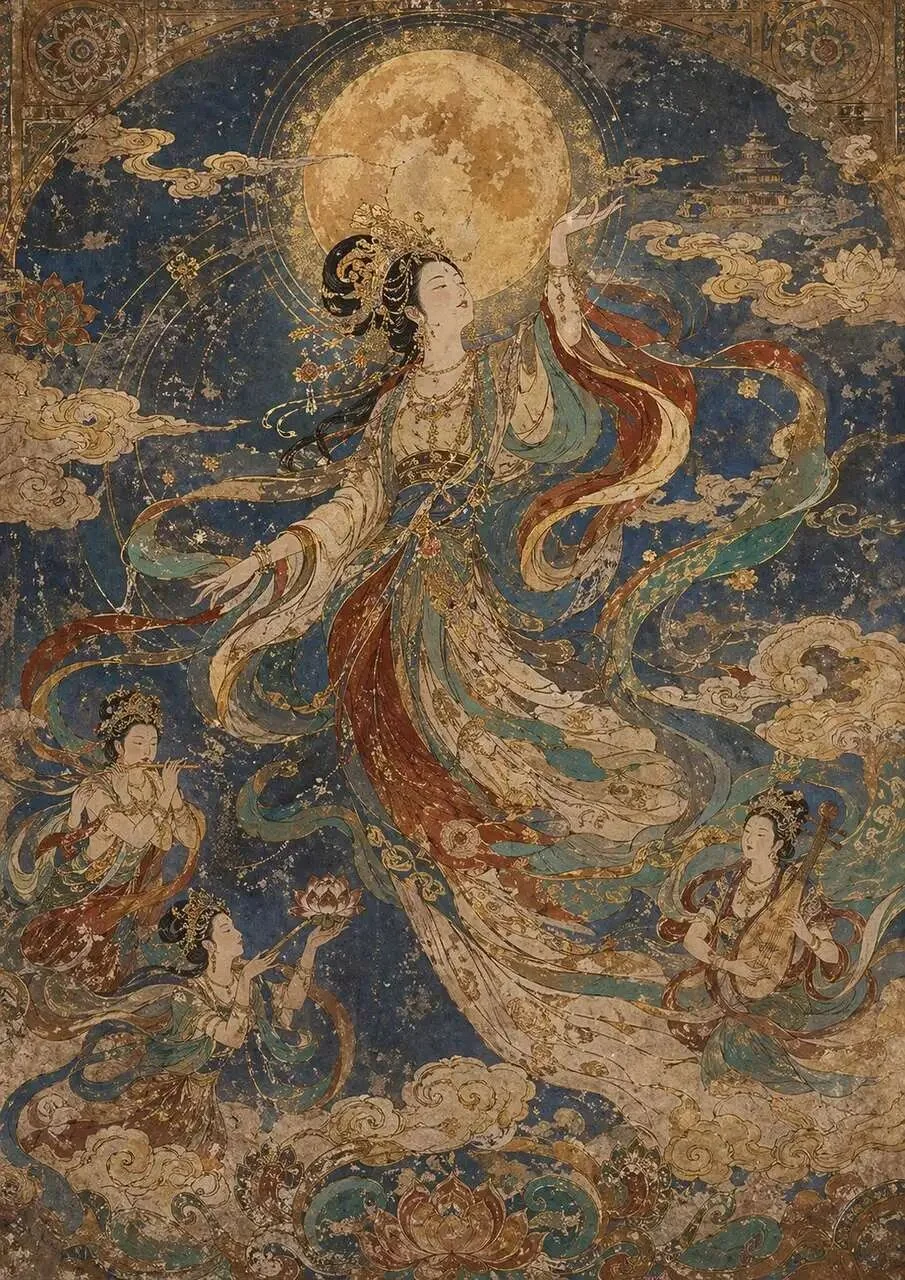
Chang'e Flying to the Moon (嫦娥奔月)
Create a Dunhuang mural-style high-end art painting centered on [THEME]. Museum-grade aesthetics, cultural depth, collectible art quality.

Main figure: elegant, solemn, elongated, divine. Serene, sacred face — Dunhuang apsara/bodhisattva aura, NOT generic ancient beauty. High chignon with elaborate gold ornaments, jeweled coronet, earrings, necklaces, armlets. Flowing robes, rhythmic drapery lines.

Gold structure: not scattered gold leaf, but structured opulent order — gold on crowns, jewelry, garment edges, sash borders, lotus petals, mandalas, ceiling patterns. Effect: "resplendent but not garish, sumptuous but not cheap."

Colors: ochre red, cinnabar, cyan-green, azurite, malachite, earth yellow, ivory white. Rich, deep, archaic, noble. No candy colors.

Decorative elements: apsaras, lotus, baoxiang flowers, ceiling medallions, auspicious clouds, celestial musicians — all arranged hierarchically around the main figure, not evenly spread.

Material: ancient cave wall texture — mottling, cracks, weathering, patina, flaking edges, combined with surviving gold leaf traces. "Old yet precious, damaged yet splendid."

Negative constraints: no modern guochao style, no commercial illustration feel, no anime, no plastic texture, no cheap gold, no neon, no oversaturation.

Theme: Flying Apsara (飞天神女)
Closing Thoughts
The key to AI image generation isn't "can you draw" — it's "can you describe the image clearly."
A prompt isn't a spell. It's more like a design specification written for AI.
So don't just bookmark these. Pick a case you like, swap the topic for your own, and run it.